
Fair Shot!
Horus Ent HKPuzzle
3.910.00 Reviews
- Version
- 0.0.2.4
- Installs
- 100.00K
- Age Rating
- Everyone
Screenshots
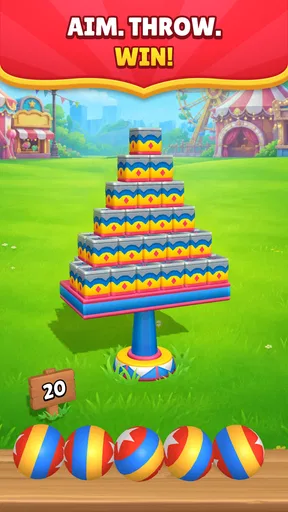
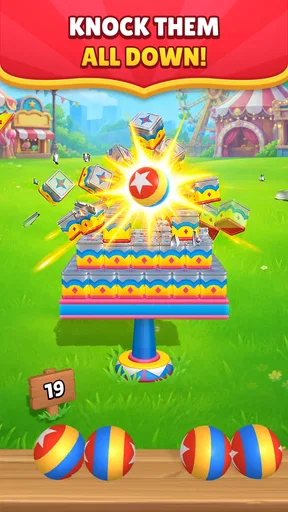
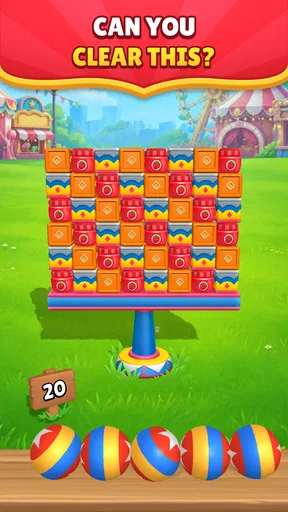
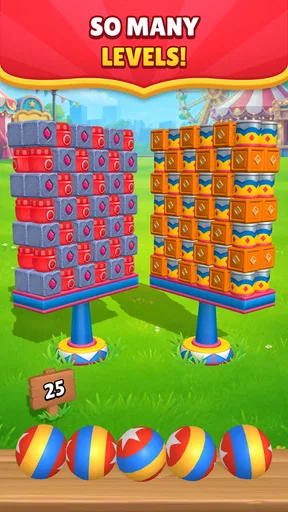
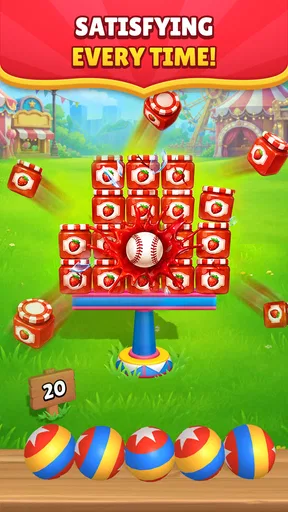
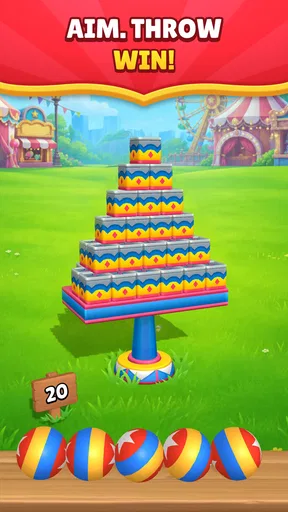
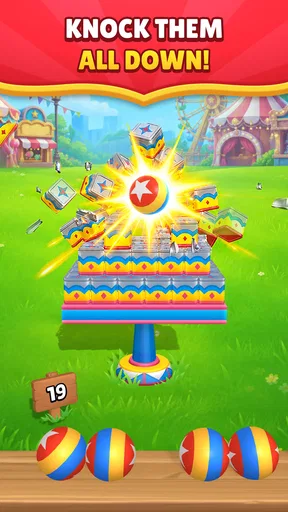
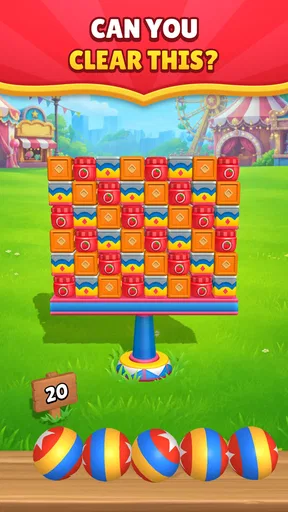
Our Review of Fair Shot!
 Analysis by Appyee
I first approached Fair Shot! as a quick puzzle game rather than something I would keep installed for months. Its basic idea is easy to understand: aim, throw balls, knock down cans, and try to improve the result. That simplicity is the main attraction. I can open it without learning a complicated ruleset, and the short action loop makes sense when I have only a few spare minutes.
At the same time, simple does not automatically mean lasting. A game built around one familiar action has to make each attempt feel satisfying long after the first few rounds. My experience with Fair Shot! is that its early appeal comes from immediate feedback and low friction, while its long-term value depends much more on whether I enjoy repeating the same type of challenge. This is a free puzzle title from Horus Ent HK, rated for Everyone, with optional in-app purchases ranging from $1.99 to $99.99 per item.
What the first week feels like
The opening appeal is straightforward. I do not need to spend time understanding a story, assembling a team, or memorizing a large collection of rules. The central task is visible right away, so the game suits those moments when I want a small distraction instead of a major gaming session. That makes it approachable for casual players, younger users, and anyone who prefers physical-feeling puzzle actions over menus and long explanations.
The throwing concept also gives the game a useful sense of personal control. Even when the objective is simple, I am still responsible for deciding when and how to make the shot. That creates a small mental pause before each attempt: I look at the target, judge the angle, and commit. For me, this is more engaging than a puzzle where the correct move is found entirely through tapping symbols or matching colors.
During a first-week routine, I would use Fair Shot! in short bursts. It fits a wait for a bus, a break between tasks, or the few minutes before going to sleep. The low commitment is a strength because I do not feel punished for leaving after a handful of attempts. A game that respects short sessions can become a useful casual habit even when it is not deep enough to replace a larger puzzle game.
There is also a social use case, although I would keep expectations realistic. Passing the phone to a friend and comparing who can make the cleaner shot can be more entertaining than playing alone for a long stretch. The game’s premise is immediately understandable, so someone unfamiliar with it can try without a tutorial-heavy introduction. That makes it a better choice for informal competition than for players looking for a rich solo campaign.
One practical tip is to avoid treating every throw as a race. I get more enjoyment when I use the first moments of a round to observe the setup instead of rushing because the action looks easy. Small differences in aim can matter more than frantic tapping. This approach also turns the game into a light precision exercise, which gives the repeated action a little more purpose than simply trying to finish quickly.
The first-week weakness is equally clear: the core idea can reveal its limits fast. If knocking down cans is the only activity I want from a game, the novelty may fade once the basic satisfaction of a successful shot becomes familiar. Players who need a steady stream of new mechanics, characters, or narrative events may find the experience too narrow. Fair Shot! is strongest when I want a focused miniature challenge, not when I expect a constantly expanding adventure.
The current version is 0.0.2.4, and that version label is worth keeping in mind when setting expectations. I see this as an experience that may still feel early in its development rather than a fully established puzzle platform with years of accumulated content. That does not prevent it from being enjoyable now, but it does make the decision to keep it installed more dependent on how well its present loop matches my habits.
How it compares with familiar puzzle alternatives
Compared with match-three games, Fair Shot! asks for timing and aim instead of planning chains across a grid. That makes it feel more physical and immediate, but it may offer less variety in the way problems are solved. Compared with physics-puzzle games, it has a more direct objective, which can be refreshing when I do not want to manipulate several objects or test elaborate solutions.
It also differs from endless score-chasing games. The appeal is not necessarily speed or a huge stream of obstacles; it is the satisfaction of making a good throw. That distinction matters when choosing what to install. If I want a calm, focused action, this is a reasonable fit. If I want a broad puzzle collection with different rules every few minutes, another option would probably hold my attention better.
The store listing shows an average rating of 3.9 from around 150 ratings, alongside more than 100 thousand installs. I read those figures as signs of a modest audience with mixed but generally workable reception, not as proof that the game will suit everyone. The rating is useful context, but my own preference would depend on whether I enjoy repeating a single aiming-based activity.
Whether it keeps its place after the novelty
I’d judge its staying power by whether a few deliberate throws still feel rewarding once the first curiosity has passed. A small personal target—such as aiming more consistently—can give each brief visit a purpose, but it won’t replace changing puzzles for someone who needs constant variety. I’d keep it installed only while those short sessions leave me satisfied rather than wishing the game offered a broader challenge.
Month-to-month value depends on a small daily ritual
For Fair Shot! to earn a permanent place on my phone, I need to give it a specific role. The most realistic role is a compact break-time game: open it, play a few rounds, put it away, and return later. I would not expect it to become a main hobby unless the act of improving my throws is personally satisfying. The game can support a habit, but it does not create one automatically.
A useful routine is to set a personal goal for each session rather than playing without direction. I might focus on cleaner aim, fewer wasted attempts, or simply stopping after a satisfying run. This prevents the game from becoming background tapping. It also helps me judge whether I am returning because I genuinely enjoy the challenge or merely because the icon is convenient to open.
Another non-obvious trade-off is the difference between short-term improvement and long-term variety. Precision games can feel rewarding while I am learning their feel, because each session gives me a chance to correct a mistake. Once my technique stabilizes, improvement may slow down. At that point, the game needs enough changing circumstances or personal challenge to remain meaningful. If it does not, I would keep it as an occasional time-filler rather than a daily title.
The free entry price makes that experiment easy. I can try the core experience without paying first, which is helpful for families and cautious players. However, the presence of purchases from $1.99 to $99.99 per item means I would approach spending carefully. I would not buy anything simply to extend a session or chase a better result. First I would decide whether the unpurchased experience already gives me a reason to return.
For parents, the Everyone rating makes the game easier to consider in a shared-device setting. I would still supervise purchases, especially because the listed price range reaches from a small optional payment to a much larger one. The age rating addresses suitability, but it does not replace sensible device-level purchase controls. That is a practical part of using any free game with optional spending.
For adults, the strongest recurring use is probably a short reset between demanding tasks. Aiming at a clear target can feel more refreshing than opening a social feed, because it gives the mind one bounded objective. I would not call it a deep mindfulness tool, but its narrow focus can be useful when I want a few minutes of uncomplicated concentration.
Maintenance is light, but attention is the real cost
The maintenance burden is not about managing a large collection of characters, equipment, or resources. Fair Shot! presents itself as a compact puzzle game, so the main upkeep is deciding whether it still deserves a place on the home screen. That is a low technical burden, but it can become a high attention burden if I keep opening it out of habit after the enjoyment has weakened.
I would review its value after a week and again after a month. The question is not whether I can still play it, but whether I am choosing it for a clear reason. If I use it during short breaks and feel satisfied afterward, it has a useful function. If most sessions end with me wishing for more variety, uninstalling it would be sensible rather than forcing a routine that no longer works.
The early version status also affects maintenance expectations. I would keep an eye on updates through the normal app-store process, but I would not build my enjoyment around promised future additions. My recommendation is based on what Fair Shot! offers now. That protects me from treating possible future content as part of the current value calculation.
Device compatibility is fairly broad, with a minimum operating system of Android 7.1. That makes it accessible to people using older Android phones, although actual comfort will still depend on the individual device and how responsive its controls feel. For a throwing game, responsiveness matters more than it would in a purely menu-based puzzle, so I would test the feel on the phone I plan to use before deciding whether it is a keeper.
One maintenance habit I find useful is keeping sessions intentional. I would avoid leaving the game open while doing something else, because its appeal comes from focused attempts rather than passive background activity. Short, deliberate play makes it easier to notice whether the aim-and-throw loop remains enjoyable. It also keeps the game from competing unnecessarily with more substantial titles.
Where fatigue begins
The first source of fatigue is repetition. Throwing balls at cans is a clean premise, but it is also a narrow one. If the surrounding challenge does not give me enough reason to rethink my approach, successful shots can begin to feel interchangeable. This is the central limitation I would explain to a friend before recommending it: the game’s clarity is also the reason its ceiling may arrive quickly.
The second is the possibility of uneven motivation. A player who loves precision can create personal targets and keep finding satisfaction in small improvements. A player who prefers unlocks, stories, or changing puzzle rules may not have the same reason to return. Neither reaction is wrong; it simply shows that Fair Shot! serves a particular kind of casual player rather than every puzzle audience.
Optional purchases can add another layer of hesitation. Free games are easier to sample, but spending can complicate the feeling of a simple pastime. I would keep my play independent of purchases unless an item clearly improves my enjoyment without replacing the challenge. The upper end of the listed purchase range is especially a reason to set a personal spending boundary before playing regularly.
There is also a difference between competition and relaxation. Comparing shots with friends can make the game livelier, but chasing results can turn a calm break into a frustrating score hunt. I would use it competitively only when everyone involved enjoys the same kind of repeated challenge. For a relaxed session, I would focus on consistency rather than treating every miss as a failure.
Finally, the game may not satisfy players who want a substantial offline-style pastime with many layers. I would choose a broader puzzle title instead if my priority were varied level design, story progression, or a large set of mechanics. Fair Shot! is better understood as a focused diversion. Its value comes from convenience and immediate interaction, not from the breadth of a full-length puzzle adventure.
My long-term verdict
I recommend Fair Shot! to someone who wants a free, easy-to-start puzzle game built around aiming and throwing. It is especially suitable for short sessions, casual family play, and players who enjoy improving physical precision through repetition. The Everyone rating and modest device requirement make it approachable, while the simple premise means I can hand it to another person without a long explanation.
I would not recommend keeping it installed automatically just because it is free. After the first burst of curiosity, its future depends on whether the core action continues to feel rewarding. My best advice is to test it as a small routine: play briefly, set your own precision goal, and notice whether you return because you want another attempt rather than because you have nothing else to open.
In the end, Fair Shot! earns lasting space for the right player, but not through endless variety. It earns that space by being immediately understandable and easy to revisit. For me, that makes it a useful occasional companion and a potentially steady break-time game, with repetition and purchase choices as the main cautions. If you value a compact challenge more than a deep progression system, it is worth trying; if you need constant novelty, I would choose a richer puzzle alternative instead.
Verdict
Strengths of Fair Shot!
- Quick, casual gameplay that fits well into short breaks.
- Simple controls make it easy for new players to get started.
- Competitive format adds tension and encourages repeat matches.
- Bright visuals and clear feedback keep the action easy to follow.
- A good choice for players who enjoy skill-based shooting challenges.
Limitations of Fair Shot!
- Match quality may depend heavily on the number of active players.
- Repeated rounds can feel similar after extended play sessions.
- Fast-paced action may be frustrating for players who prefer slower games.
- Some features or content may require in-app purchases.
- Performance can vary on older phones or weaker mobile connections.
Other Releases by Horus Ent HK
View All
Skull Hero
Role Playing4.5

Time Evolve: Age Rush
Action4.5
Similar Picks in This Category
View All
Block Blast!
HungryStudio4.8

Braindom: Brain Games Test
Lahana Game Studio4.6

AMAZE!
CrazyLabs LTD4.6

Sudoku - Classic Sudoku Puzzle
Oakever Games4.7

Art Puzzle - Puzzle Games
Easybrain4.8

Amaze GO!
Oakever Games4.9
Frequently Asked Questions
What is Fair Shot!?
Fair Shot! is a mobile game built around quick, skill-based challenges in which players compete to achieve the best possible results. Its appeal comes from simple controls, short sessions, and a competitive structure that makes it easy to play casually while still encouraging repeated attempts. Before downloading, users should check the current store description because available modes, features, and supported devices may change with updates.
Is Fair Shot! free to download and play?
Fair Shot! can generally be downloaded without an upfront purchase, although the exact monetization model may depend on the version available in your region. The game may include advertising, optional in-app purchases, or paid items connected with progression and customization. Players who prefer a completely uninterrupted experience should review the App Store or Google Play listing carefully before installing and confirm whether purchases can be disabled.
Does Fair Shot! require an internet connection?
The connection requirements may vary depending on which features you use. Basic gameplay may be available offline if the installed version supports local play, but online leaderboards, competitive events, advertisements, account synchronization, and updates normally require internet access. If you plan to play while traveling or with limited data, test the game offline after installation and check whether any important mode becomes unavailable.
Is Fair Shot! suitable for children?
Fair Shot! may be easy for younger players to understand because its gameplay is designed around straightforward actions and short rounds. However, parents should review the age rating, advertising content, privacy information, and any in-app purchase options before allowing children to play. If the game includes online rankings, social functions, or competitive features, parental controls and purchase restrictions are also recommended.
What devices are compatible with Fair Shot!?
Compatibility depends on the operating system, device model, and version of the game currently distributed through the official stores. Most recent Android and iOS phones should meet the basic requirements, but older devices may experience slower performance, limited graphics, or installation restrictions. Before downloading, check the official listing for the minimum operating-system version, required storage space, and any stated hardware limitations.
Play our best games!


